Staying safe while swimming at Australia’s beaches
Australia is famous for its stunning coastline, golden sands, rolling surf, and clear blue water. Whether you’re a local or a visitor, the beach is a place for fun, relaxation, and exercise. Something to also keep in mind is that the ocean is a powerful natural environment, and understanding how to stay safe is essential for enjoying it confidently.
Here’s a practical guide to beach and swimming safety in Australia.
Swim Between the Red and Yellow Flags
If there’s one rule to remember, it’s this: always swim between the red and yellow flags.
These flags are placed by trained surf lifesavers in the safest area of the beach, away from strong currents and hazards. Lifesavers actively watch this zone and can respond quickly if someone needs help.
If there are no flags:
- Choose a different beach
- Or stay out of the water
Understand Rip Currents
Rip currents (often called “rips”) are strong channels of water flowing away from the shore. They are one of the most common dangers at Australian beaches.
For more information about how to spot a rip or swimming between the red and yellow flags, visit the SLSA Beachsafe website here.
Never Swim Alone
Swimming with others is safer and more fun. If something goes wrong, having someone nearby can make a big difference. Parents and carers should always actively supervise children, being close enough to help immediately.
Check Conditions Before You Enter the Water
Beach conditions can change quickly.
Before swimming:
- Look at warning signs
- Check weather and surf reports
- Listen to advice from surf lifesavers
Strong winds, big waves, or incoming storms can increase risk, even for experienced swimmers.
Be SunSmart
Australia has high UV levels, even on cloudy days. Protect yourself by:
- Wearing sunscreen (SPF 50 or 50+ rating) when UV index is 3 and above
- Reapplying regularly
- Wearing a rash vest, hat, and sunglasses
- Seeking shade during the middle of the day
Sun safety is just as important as water safety.
Remember the Five Steps – Slip, Slop, Slap, Seek, Slide:
- Slip on clothing, either a rash vest whilst in the water or clothing whilst walking around.
- Slop on sunscreen 50 or 50+ water-resistant 20 mins before going outside.
- Slap on a hat, wide brimmed usually provide the best protection.
- Seek shade, sun shelters on the beach are a great option especially those with a UVE rating of 97% and above.
- Slide on sunglasses.
Watch out for Marine Life
Some Australian beaches may have marine stingers, bluebottles, or other sea creatures at certain times of year.
- Pay attention to beach signage
- Ask lifesavers about local conditions
- In northern Australia, swim only in areas with protective enclosures during stinger season
Be Careful on Rocks and Headlands
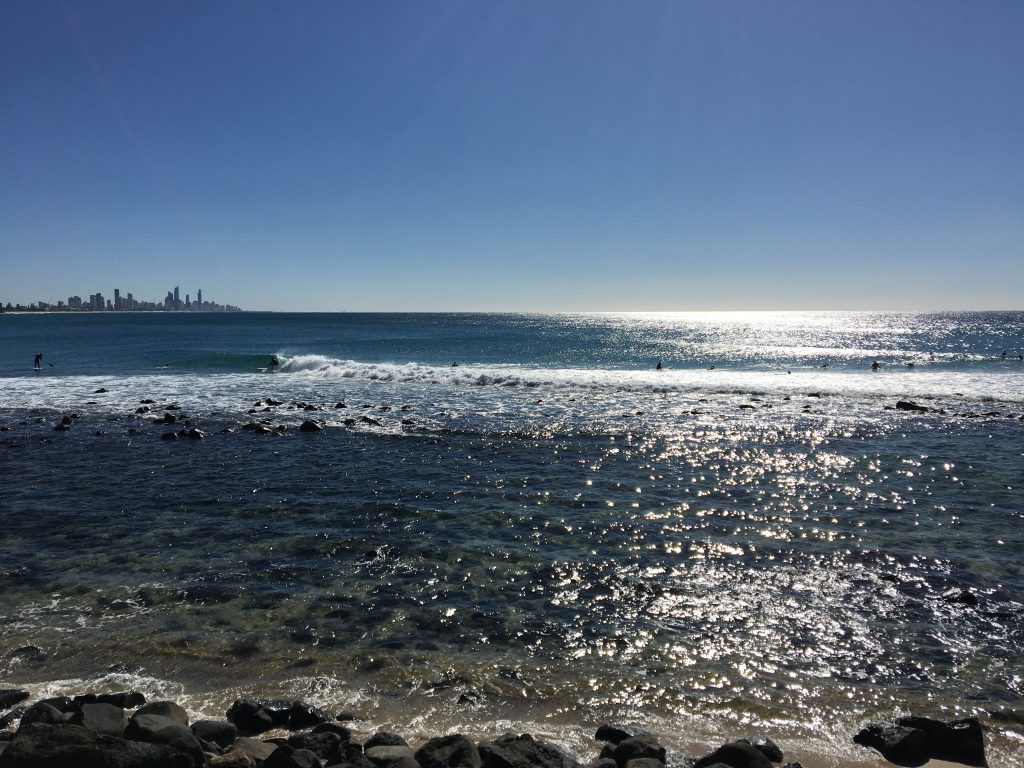
Rock platforms can be slippery and unpredictable. Sudden waves can sweep across rocks without warning.
If you’re rock fishing or exploring:
- Wear appropriate footwear
- Keep a safe distance from the water
- Never turn your back on the ocean
Know What to do in an Emergency
If someone is in trouble:
- Get help from a surf lifesaver immediately
- Call Triple Zero (000)
- Do not put yourself at risk by entering dangerous water
Australian beaches are world-class, and with the right knowledge, they can be enjoyed safely by everyone. By swimming between the red and yellow flags, understanding ocean conditions and looking out for each other, you help make the beach a safer place for all.
So grab your sunscreen, check the flags and enjoy the beach.